

Transforming a bathroom into a serene sanctuary is a pursuit that many homeowners find deeply rewarding. The art of creating a zen-inspired bathroom lies in embracing simplicity, natural beauty, and a sense of calm that invites relaxation and mindfulness. This design philosophy draws heavily from Japanese aesthetics, where every element serves a purpose and contributes to a harmonious whole. When thoughtfully executed, a zen bathroom becomes more than a functional space; it evolves into a personal retreat that supports well-being and offers a daily escape from the hustle and bustle of modern life.
Fundamental elements of zen bathroom design
At the heart of zen bathroom design is a commitment to simplicity and balance. The fundamental elements that define this style revolve around natural materials, minimalist fixtures, and an uncluttered environment that allows the mind to settle and the spirit to breathe. These principles are not merely aesthetic choices but reflections of a deeper philosophy that values harmony, tranquillity, and connection to nature. By focusing on these core elements, you can create a space that feels both timeless and deeply personal, a place where amazing journey memories of relaxation and self-care can unfold each day.
Natural Materials and Organic Textures for Serenity
The use of natural materials is essential in achieving the serene ambiance of a zen bathroom. Wood, natural stone, and organic textures bring warmth and authenticity to the space, evoking the calming presence of the outdoors. Wooden elements, whether in the form of shelving, cabinets, or panelling, introduce a sense of grounding and comfort. The grain of the wood and its earthy tones create a visual softness that contrasts beautifully with the sleek surfaces of modern fixtures. Natural stone, such as slate or limestone, can be used for flooring, countertops, or even tub surrounds, adding a tactile richness that invites touch and admiration. These materials age gracefully, developing a patina over time that enhances their character and deepens the connection to nature.
Organic textures extend beyond the primary materials to include plush textiles and carefully chosen accessories. Soft, absorbent towels and rugs in neutral tones contribute to the sensory experience, wrapping the body in comfort after a relaxing soak or shower. Textured walls, achieved through subtle finishes or natural materials, add depth and interest without overwhelming the senses. The goal is to create a cohesive environment where every surface and texture works together to foster a sense of peace and well-being. By prioritising natural materials and organic textures, you lay the foundation for a bathroom that feels both luxurious and effortlessly calming.
Minimalist fixtures and clutter-free spaces
Minimalism is a cornerstone of zen design, and in the bathroom, this translates to clean lines, uncluttered surfaces, and fixtures that blend seamlessly into the overall aesthetic. A freestanding bathtub often serves as the focal point, its elegant form inviting long, leisurely soaks that encourage meditation and relaxation. Glass showers with frameless enclosures maintain an open, airy feel, allowing natural light to flow freely and preventing the space from feeling cramped or confined. Raised sinks and simple vanities with minimal ornamentation contribute to the streamlined look, emphasising function and form in equal measure.
Clutter-free storage is paramount in maintaining the serene atmosphere of a zen bathroom. Ample storage solutions, such as built-in cabinets or discreet shelving, ensure that everyday necessities remain out of sight, preserving the visual calm of the space. The absence of clutter allows the mind to relax and focus on the present moment, free from the distractions of disorganisation. Every item in a zen bathroom should have a designated place, and only those items that serve a clear purpose or bring genuine joy should be on display. This disciplined approach to storage and organisation not only enhances the aesthetic appeal but also supports the rituals of self-care and mindfulness that are central to the zen philosophy.
Crafting a tranquil atmosphere through thoughtful details
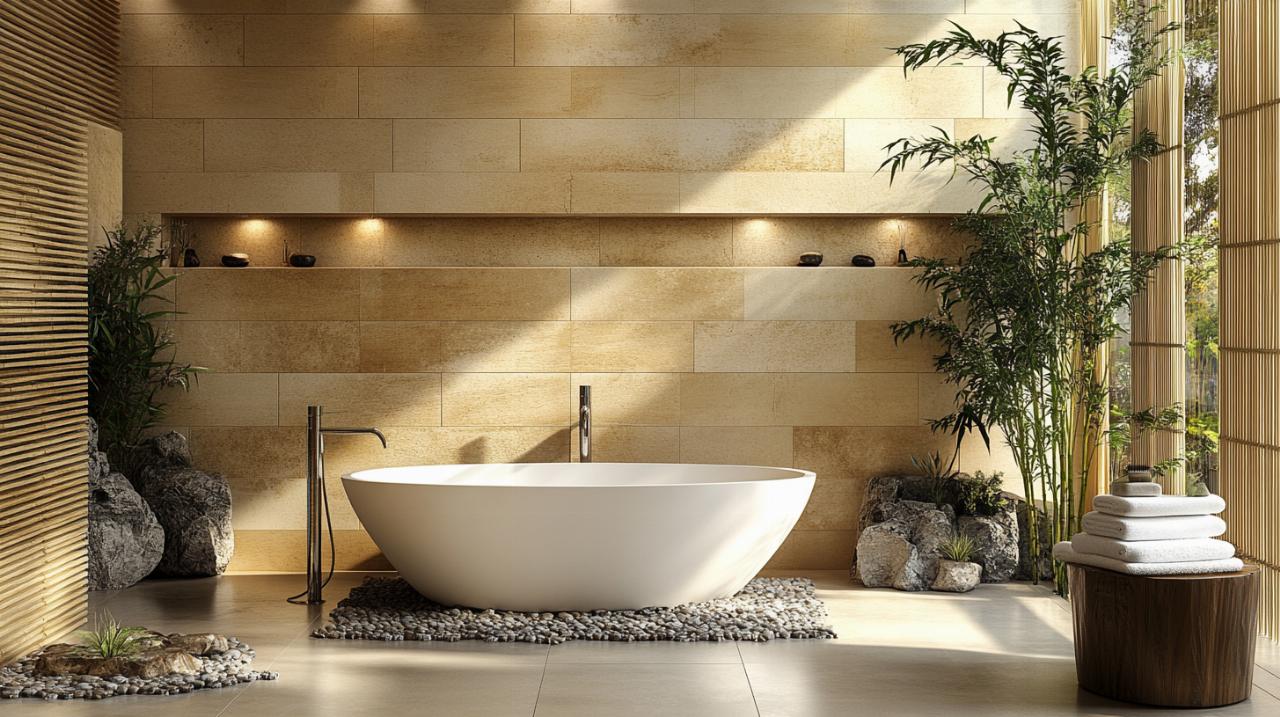
Creating a tranquil atmosphere in a zen bathroom goes beyond the selection of materials and fixtures; it requires careful attention to the details that engage the senses and shape the overall experience. Lighting, colour, and the incorporation of living elements such as plants and water features all play crucial roles in establishing a space that feels like a true sanctuary. These thoughtful details transform a functional bathroom into a spa-like retreat, where the stresses of the day dissolve and the spirit is renewed.
Soft lighting and soothing colour palettes
Lighting in a zen bathroom should be gentle and layered, creating a warm and inviting ambiance that soothes rather than stimulates. Harsh overhead lighting can disrupt the sense of calm, so it is best to incorporate multiple light sources at different levels. Recessed lighting, wall sconces, and candles all contribute to a soft, diffused glow that encourages relaxation. Natural light is also highly valued, and large windows or skylights can flood the space with daylight, connecting the interior to the rhythms of nature and enhancing the sense of openness.
The colour palette in a zen bathroom is typically neutral and muted, drawing on shades of white, beige, soft grey, and earthy browns. These calming tones create a serene backdrop that allows the natural materials and textures to shine. The use of a neutral palette also promotes a sense of continuity and flow, unifying the space and preventing visual fragmentation. Occasional accents in soft greens or warm wood tones can add depth and interest without disrupting the overall harmony. The goal is to create an environment that feels restful and balanced, where the eyes can rest and the mind can settle into a state of peaceful awareness.
Incorporating Plants and Water Features for Calmness
Greenery is a vital component of zen bathroom design, bringing life and vitality to the space while reinforcing the connection to nature. Humidity-loving plants such as ferns, orchids, and bamboo thrive in bathroom environments, adding a touch of natural beauty and improving air quality. These plants require minimal maintenance yet offer maximum visual and sensory rewards, their lush foliage softening the hard edges of tile and stone. Placed strategically on windowsills, shelves, or in corners, they create focal points that draw the eye and invite contemplation.
Water features, whether a simple fountain or the sound of running water from a well-designed tap, contribute to the calming atmosphere by engaging the sense of hearing. The gentle murmur of water has a soothing effect, promoting relaxation and helping to mask unwanted noise from outside the bathroom. In some designs, a sunken tub or a raised basin can mimic the tranquil qualities of a natural water source, enhancing the overall spa-like experience. The interplay of water, light, and greenery creates a multisensory environment that supports meditation and mindfulness, transforming the daily ritual of bathing into a restorative practice.
Calming scents further enrich the sensory experience, with lavender, eucalyptus, and sandalwood being popular choices for soaps, candles, and diffusers. These aromas have long been associated with relaxation and stress relief, and their presence in the bathroom can elevate a simple shower or bath into a therapeutic experience. By thoughtfully incorporating plants, water features, and soothing scents, you create a zen bathroom that engages all the senses and offers a true escape from the demands of everyday life.